
Live-Tool CNC Turning Centers: Common Questions
Understand which drilled and milled features can stay in the turning setup
Live tooling adds powered cutters to a turning center. It can remove a separate mill operation for suitable parts, but tool access, spindle positioning and machine axes determine what can actually be finished.
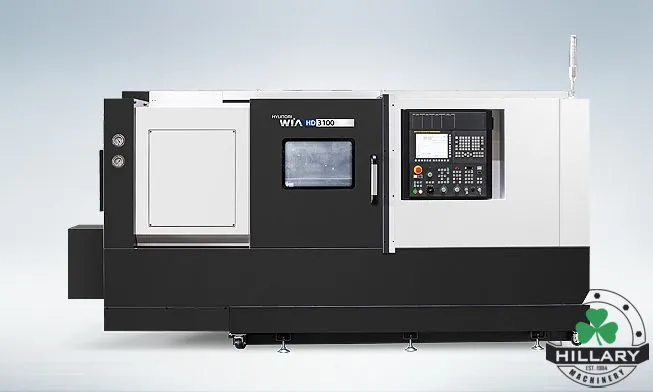
What is live tooling on a CNC lathe?
Answer: Live tooling powers rotating drills, taps or milling cutters mounted in the turning-center turret. The part can remain clamped while these tools make selected non-turning features. The capability depends on spindle positioning, available axes and suitable toolholders.
What is the C-axis used for?
Answer: C-axis control positions or rotates the work spindle as a programmed axis. In combination with powered tools it can locate holes or flats at selected angular positions. Check the control, machine configuration and cutting method for the actual feature.
When is a Y-axis necessary?
Answer: Y-axis adds off-center linear movement for features that cannot be reached efficiently with the available X, Z and C motions alone. It can improve access for slots, off-center holes and certain milling operations. Not every live-tool part needs it.
What features can live tools produce?
Answer: Depending on the machine and tooling, typical candidates include axial or radial drilling, tapping, flats, keyways and limited pockets. Each feature needs a tool approach, sufficient spindle power and clearance. Check the part program rather than assuming every milling operation fits a turret tool.
Will a live-tool lathe eliminate every second operation?
Answer: Not necessarily. Hidden features, extensive milling, difficult back-face work or large cutters may still require another setup or a more capable multi-axis machine. The goal is to remove operations that the specific machine can complete accurately and economically.
Does live tooling automatically include a sub-spindle?
Answer: No. A sub-spindle is a separate configuration option that may transfer the part for back-working. A machine can have powered tools without a sub-spindle, and the exact arrangement varies by model. Verify the quoted features individually.
How many powered-tool stations do I need?
Answer: Count required live and fixed tools, duplicates, probes and future part-family needs. Check axial and radial holder positions, maximum tool size and allowable driven-tool speed. A nominal turret-station count does not mean every station can drive a tool.
Can one setup improve feature relationships?
Answer: It can reduce errors introduced by reclamping when turned and milled features remain referenced to the same setup. Final accuracy still depends on workholding, thermal control, tool condition, program and inspection. Verify critical tolerances using the proposed process.
Can live-tool turning be automated?
Answer: Yes, where loading and unloading fit the part and machine. Bar feeding or robotic tending can extend run time, but combined operations may increase the number of tools and the need to monitor tool life and chips. Plan inspection and part handling with the cell.
When should I compare a full mill-turn center?
Answer: Compare more advanced configurations when the part has substantial milling, angled features, many tools, or back-working beyond a basic powered turret’s practical reach. A drawing and process route reveal whether the added capability saves enough setups and time.
Application review checklist
- Mark every cross-hole, flat, slot, tapped hole and back-face feature.
- Confirm C-axis indexing, Y-axis need and live-tool orientations.
- Check turret stations, powered-tool capacity and interference clearance.
- Compare the combined process to the current lathe-plus-mill route.
Explore machines and discuss your application
Hillary Machinery supports manufacturers across Texas, Oklahoma, Arkansas, Louisiana, Mississippi, Alabama and Tennessee. Specific models and availability should be confirmed for your location and application.
Email your part drawing and requirements or call 972-578-1515.