Hillary Machinery has represented Hyundai WIA CNC machine tools for more than 23 years, helping manufacturers select, install, apply and support Hyundai WIA turning centers, vertical machining centers, horizontal machining centers, multi-axis CNC machines and automated manufacturing systems.
Serving manufacturers throughout Texas, Oklahoma, Arkansas, Louisiana, Mississippi, Alabama and Tennessee, Hillary Machinery combines Hyundai WIA machine tools with applications engineering, turnkey solutions, FANUC robotic automation, installation, training, CNC service and ongoing technical support.
Buying a CNC machine is about more than the machine. It's about who stands behind it.
Three versatile Hyundai WIA CNC platforms for many of the most common machining applications throughout our seven-state territory. View machine specifications, current availability and pricing information.
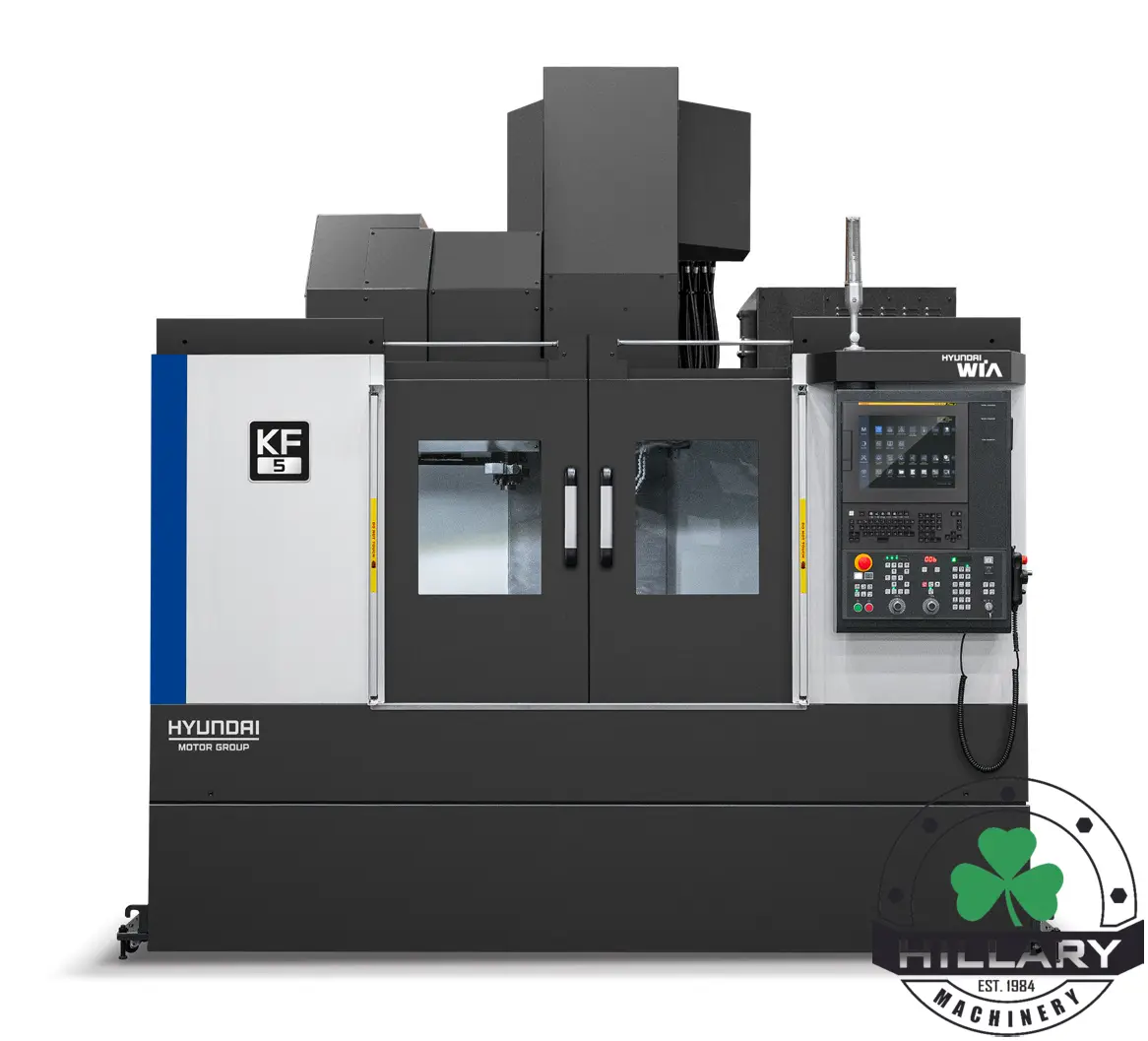
12,000 RPM CAT40 Vertical Machining Center
A highly versatile VMC with approximately 41" of X-axis travel, 22" of Y-axis travel, a 12,000 RPM CAT40 Big Plus spindle and 30-tool magazine.
An excellent fit for job shops, aerospace, automotive, energy and general production machining.
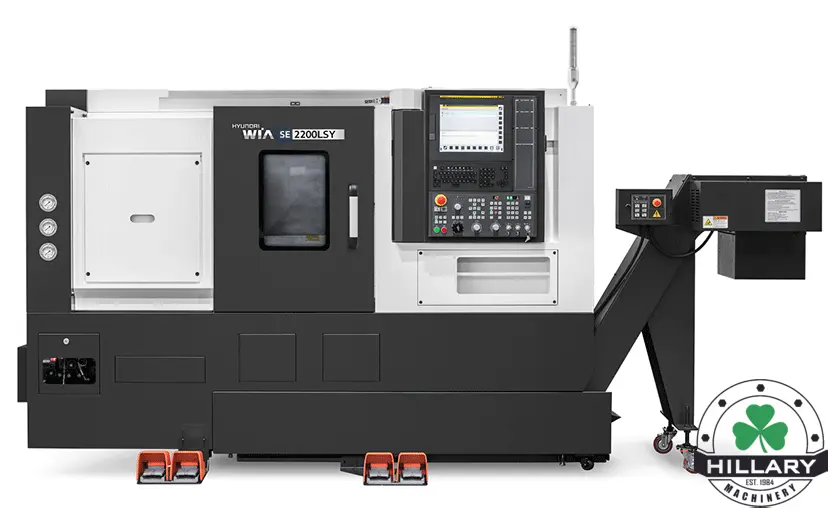
Y-Axis Live-Tool Turning Center
Combine turning, milling and drilling operations on one CNC platform to reduce setups, improve part flow and increase machining flexibility.
Well suited for job shops, production machining, bar work and automated manufacturing applications.
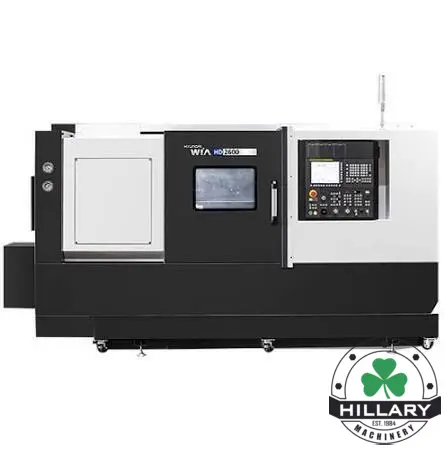
Heavy-Duty 2-Axis CNC Turning Center
A robust turning platform for manufacturers requiring greater capacity, rigidity and machining capability for demanding turned components.
A strong fit for oil and gas, valves, energy, shafts, industrial equipment and general heavy-duty turning applications.
VIEW ALL MACHINES AVAILABLE NOW
Current machine availability, configurations and pricing are subject to change.
Not sure which Hyundai WIA machine is right for your application?
Send Hillary Machinery your part drawing, material, required operations, tolerances and production requirements and let our applications team help evaluate the appropriate machine configuration.
Read Hyundai WIA Customer Reviews | Talk to a CNC Specialist
Looking for a Hyundai WIA CNC machine without a long factory lead time? Hillary Machinery maintains select CNC machines available for near-term delivery.
View current inventory, pricing, estimated monthly payments and machine details.
Choosing a CNC machine tool is about more than comparing specifications. It is also about the experience and capabilities of the company that helps select, apply, install and support the machine.
Hillary Machinery has represented Hyundai WIA CNC machine tools for more than 23 years. During that time, we have helped manufacturers apply Hyundai WIA turning centers, vertical machining centers, horizontal machining centers, multi-axis machines and automated manufacturing systems to a wide range of production requirements.
Our approach begins with the manufacturing application. We work with customers to evaluate the part, material, required operations, production volume, workholding, tooling, automation requirements and long-term production goals before recommending a machine configuration.
Hillary Machinery provides manufacturers with a complete resource for CNC manufacturing technology, including:
As a FANUC Authorized Systems Integrator, Hillary Machinery can also combine Hyundai WIA CNC equipment with robotic machine tending and other automation to help manufacturers increase spindle utilization, address labor requirements and expand unattended production.
More than two decades representing Hyundai WIA gives Hillary Machinery extensive experience with the machines, their applications and the manufacturers who use them.
Our goal is not simply to sell a machine. It is to help customers select a CNC platform that fits the part, production requirements and long-term manufacturing objectives—and then provide the applications, installation, training, automation and service resources needed to support that investment.
For more than two decades, manufacturers have selected Hyundai WIA CNC machine tools through Hillary Machinery for their combination of performance, value and long-term support.
“Of our 24 CNC lathes, 12 are Hyundai WIA machines purchased through Hillary Machinery.”
“What I am most happy with is what you get from Hyundai for the dollar you’re spending.”
— David Kulbeth
“These Hyundai Wia do everything that more expensive counterparts do but are much more cost-effective.”
“We did look at alternative brands but have found our existing Hyundai-Wia models very durable, reliable and fit-for-purpose.”
— Andy Marks
“Every promise he has made has been backed up by their entire team.”
“We feel very secure knowing they are backing us up with the right equipment and excellent customer support.”
— Edie Canale
Read More Hyundai WIA Customer Reviews »
The best machine normally becomes clear when the discussion starts with the part rather than a machine model. When evaluating a Hyundai WIA CNC machine, consider:
Hyundai WIA CNC equipment can be applied across a broad range of manufacturing industries and components, including:
Hillary Machinery represents Hyundai WIA CNC machine tools throughout Texas, Oklahoma, Arkansas, Louisiana, Mississippi, Alabama and Tennessee. Our team can assist with machine selection, applications engineering, turnkey systems, automation, installation, training and ongoing CNC service and support.
Yes. Hyundai WIA offers CNC turning machines ranging from conventional 2-axis lathes to live-tool and multi-axis turning centers capable of combining turning, milling and drilling operations.
Yes. Hyundai WIA offers vertical machining centers for applications ranging from general-purpose job-shop machining to higher-production and more complex manufacturing requirements.
Yes. Hyundai WIA offers horizontal machining centers in multiple pallet sizes and configurations for production machining and heavier cutting applications.
Yes. Hyundai WIA offers 5-axis machining configurations for manufacturers producing complex parts that benefit from multi-face machining, reduced setups or simultaneous multi-axis motion.
Yes. Depending on the machine and application, Hyundai WIA CNC equipment can be integrated with robots, automatic workholding, pallet systems, conveyors and other automation. Hillary Machinery provides in-house CNC automation capabilities and is a FANUC Authorized Systems Integrator.
Yes. Hillary Machinery provides CNC machine-tool service, repair, preventive maintenance and parts support. Contact our service team with the machine model, serial number and service requirement for assistance.
Whether you need a CNC lathe, live-tool turning center, vertical machining center, high-production horizontal machining center, 5-axis machine or fully automated manufacturing system, Hillary Machinery can help evaluate the appropriate Hyundai WIA configuration.
Send us your part. Provide a drawing, material, required operations, tolerances and expected production volume, and our team can help evaluate the machining process and equipment requirements.
View CNC Machines Available Now » | Read Hyundai WIA Customer Reviews » | Send Us Your Application »
We use cookies to improve your experience. Privacy Policy.