Drilling and Tapping Centers: Application FAQ
Decide when a compact, fast-tool-change machine fits your part mix
A drill tap center is designed for efficient holemaking, threading and lighter milling on parts that fit its work envelope. A realistic cycle comparison should include loading, tool changes and all required cuts.
What is a drill tap center?
Answer: It is a compact CNC machining center optimized for rapid drilling, tapping and tool changes, often with light milling capability. It is still a machining center, but its particular spindle and machine package should be checked before assigning heavy milling work.
What parts are good candidates?
Answer: Smaller housings, brackets, covers and similar parts with many holes or threaded features can benefit when they fit the travel and load limits. A part with extensive heavy roughing or a large fixture may favor a general-purpose or heavy-duty VMC.
How is it different from a VMC?
Answer: Both can drill and tap. A drill tap center typically emphasizes rapid motion and short tool-change time in a compact envelope; a VMC may offer a wider range of work envelopes and heavier spindle packages. Compare complete part cycles rather than machine labels.
Can a drill tap center mill?
Answer: Yes, within the specific spindle, tooling and machine limits. Light facing, pockets and contours may fit well. For sustained large-cutter roughing, compare torque, taper, guideways, table capacity and cycle time with an appropriate VMC.
What is rigid tapping?
Answer: Rigid tapping synchronizes spindle rotation and axis feed so a tap can enter and reverse in a programmed cycle. Confirm the control and machine capability, required thread sizes, holder choice and material. Successful tapping also depends on tool condition, coolant and correct feeds.
What tooling interface should I expect?
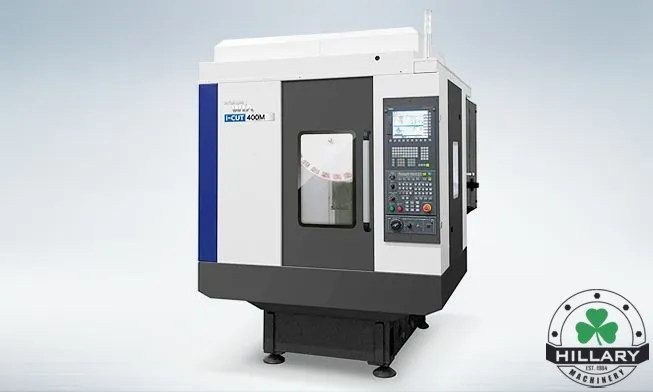
Answer: Compact drill tap machines often use smaller taper interfaces; the illustrated Hyundai WIA i-CUT4000 listing specifies BBT #30. Other machines and configurations can differ. Check the exact taper, holder type, allowable tool dimensions and compatibility with your existing tooling.
Does a fast tool changer always reduce cycle time?
Answer: Its effect depends on how much of the current cycle is spent changing tools. A part with many short drilling and tapping operations may benefit more than one dominated by a long milling cut. Compare tool-to-tool and total part cycle under representative conditions.
Can I add a rotary table or fourth axis?
Answer: That depends on the machine, control and available table space and load. The rotary and fixture reduce usable work envelope and may change tool access. Verify the complete setup and intended indexing or contouring requirements before specifying the option.
Can drill tap centers be automated?
Answer: Potentially. Short cycles make loading time important, so robots, pallets or fixtures can help when the part mix and volume justify them. Confirm part presentation, door access, fixturing, tool life and inspection alongside the machine cycle.
What information supports a drill tap center quote?
Answer: Send the drawing, raw stock, material, part weight, thread details, annual volume and a list of cutting operations. A current program or cycle breakdown helps compare a drill tap center with a VMC on actual output and quality requirements.
Application review checklist
- Count holes, thread sizes, cutter changes and light-milling operations.
- Check stock and fixture against travel, table load and tool clearance.
- Confirm the quoted spindle taper and holder inventory.
- Time a representative complete cycle, including load and unload.
Explore machines and discuss your application
Hillary Machinery supports manufacturers across Texas, Oklahoma, Arkansas, Louisiana, Mississippi, Alabama and Tennessee. Specific models and availability should be confirmed for your location and application.
Email your part drawing and requirements or call 972-578-1515.