Mill-Turn Centers: Capability and Buying Questions
Compare powered-turret lathes with more advanced turning and milling systems
Mill-turn combines turning with rotating-tool work on one platform. Machine configurations range from a turning center with live tools to a multitasking system with additional axes and milling capacity. Start with the route sheet, not the label.
What is a mill-turn center?
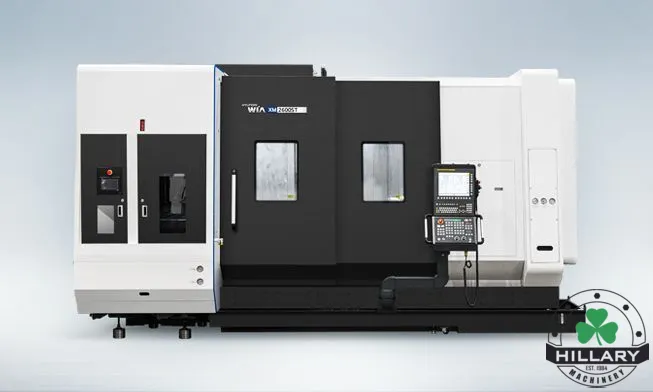
Answer: It is a CNC platform that combines turning and milling operations so suitable parts can be completed with fewer transfers. The term covers several levels of capability; ask which axes, spindles, tools and control functions are included on the quoted machine.
Are mill-turn and turn-mill different machine categories?
Answer: The terms are often used interchangeably in sales and production. Some shops use them to emphasize whether turning or milling dominates the process, but there is no reliable feature list from the name alone. Specify the operations and exact machine configuration.
When is a live-tool lathe enough?
Answer: A powered-turret lathe may be enough when milling consists mainly of modest flats, holes, slots or taps reachable with available C-axis and Y-axis motions. If the milling work is extensive, angled or tool-intensive, compare a more advanced mill-turn configuration.
What does a B-axis add?
Answer: A B-axis can orient a milling spindle or tool system to approach features at additional angles on suitable multitasking designs. It can reduce special fixtures and part transfers for complex work. Check the available rotation range, interference, spindle power and actual model features.
When do I need Y-axis capability?
Answer: Y-axis can make off-center or tangential milling more practical than spindle indexing and X/Z motion alone. Review every feature’s direction and tolerance. A Y-axis is useful only if the machine, tooling and work envelope can also reach the feature.
What does a sub-spindle contribute?
Answer: It can transfer a suitable workpiece for back-face machining without a manual flip. Part grip, transfer position, spindle capacity and tool access govern whether complete-part machining is possible. Compare the real route, not just the presence of a second spindle.
Is milling power the same on all mill-turn machines?
Answer: No. A compact powered turret and a dedicated milling spindle may support different cutter sizes and duty cycles. Compare torque, speed, tool interface, thermal behavior and the amount of milling required. A demanding milling process should be reviewed with sample parts.
What CAM and collision planning is needed?
Answer: Multiple axes, turrets and spindles increase programming and interference complexity. Confirm a supported postprocessor and simulate the actual machine, tools, chuck, fixtures and transfer sequence. Establish safe proving procedures before production.
Will combining machines always reduce cycle time?
Answer: No. One-machine processing may reduce handling and work-in-process while extending the cutting cycle on that machine. Measure total throughput, labor, setup, queue and inspection time. The right decision depends on volume and whether parallel machines currently keep up.
What should a mill-turn RFQ include?
Answer: Supply the 3D model and drawing, raw material, tolerances, annual volume, current route and target cycle. Highlight angled milling, back-working and required cutters. Ask for a proposed operation plan and explicit list of machine options, tooling and software assumptions.
Application review checklist
- Separate simple turret-milling features from demanding multi-axis milling.
- Confirm all front, side, angled and back-face tool approaches.
- Include CAM, postprocessor, fixtures and training in the project scope.
- Estimate cost per good part at realistic utilization and volume.
Explore machines and discuss your application
Hillary Machinery supports manufacturers across Texas, Oklahoma, Arkansas, Louisiana, Mississippi, Alabama and Tennessee. Specific models and availability should be confirmed for your location and application.
Email your part drawing and requirements or call 972-578-1515.